


Proposals from the ‘Tramar la métropoli’ cycle
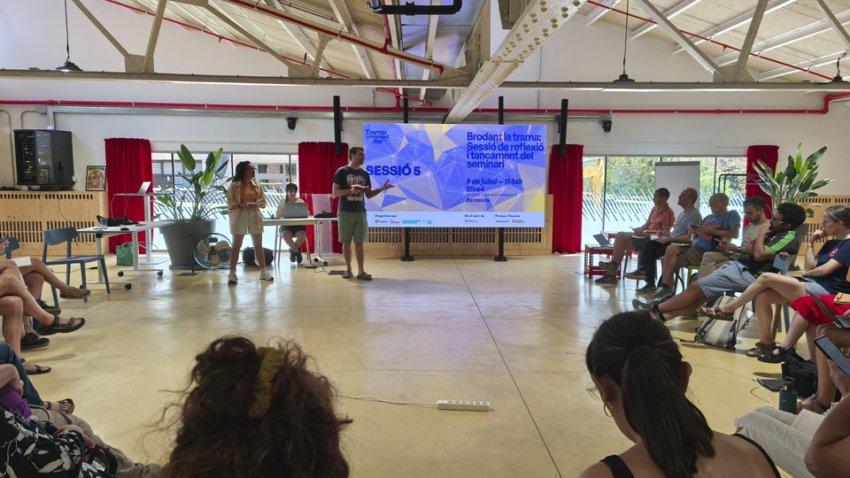
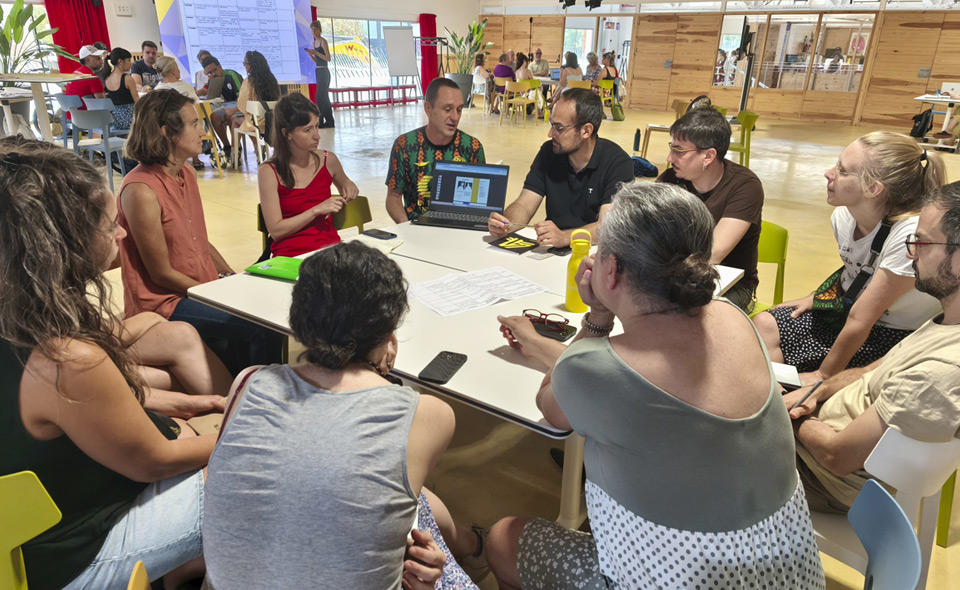
During the last months, the Tramar la Metropoli cycle has gathered entities, cooperative projects, researchers and social agents from different points of theMetropolitan area of Barcelona to think collectively about who the greats should be horizons of transformation of the territory. The process, promoted by the Bloc4BCN Diagnosis Service together with the cooperative universities Coòpolis, La Col·lectiva, Barcelonès Nord and Baix Llobregat, culminated this July 9 with a synthesis session at the Bloc4BCN.
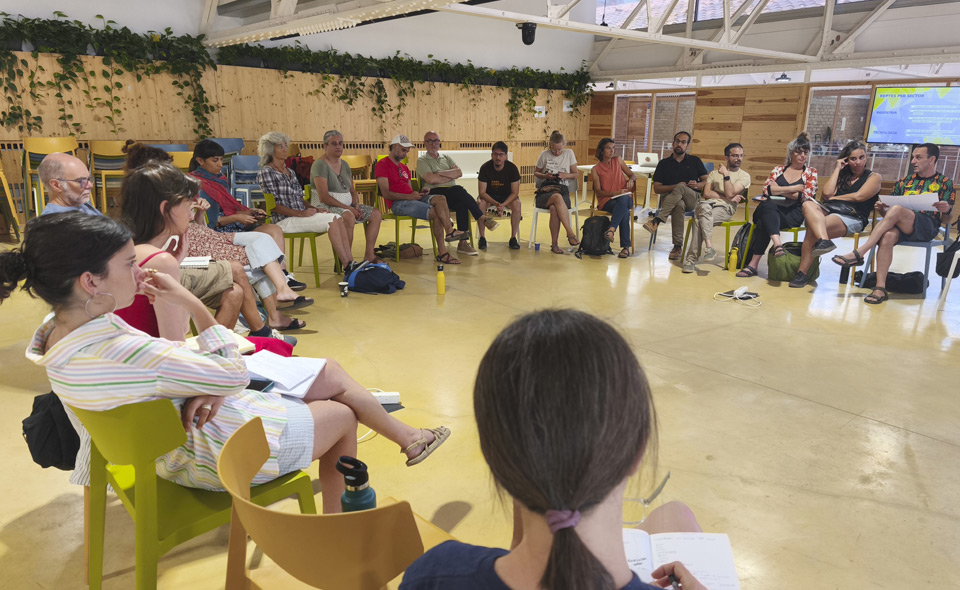
Over the course of five meetings held in several metropolitan municipalities, diagnoses and experiences have been shared by address some of the main social, economic and ecological challenges of the territory. Beyond the identification of problems, the cycle has served to put on the table concrete proposals that place the Social and Solidarity Economy (ESS) as a key player in the construction of a new metropolitan model.
One of the ideas shared throughout the process has been the need to overcome an economic model excessively oriented towards attracting investments, tourism and major events, and move towards a metropolis able to guarantee the basic needs of the population. In this sense, the different sessions have claimed the potential of the mutual cooperation, the democratic management of resources and territorial roots as tools to strengthen the resilience of communities.
the cures have occupied a central place in the debate. Faced with a system that continues to make invisible and precarious this essential work to sustain life, the participants have defended the need to dignify the sector, redistribute its responsibilities and recognize its social value. The 5R model —recognition, reduction, redistribution, remuneration and reparation—has emerged as a reference proposal to move towards a fairer care system.
The focus has also been put on the right to food. The increase in the price of basic products, the concentration of the market in a few companies and the inequalities in access to healthy food draw a worrying scenario. Faced with this, initiatives of logistics cooperation and proximity distribution have been identified as strategic tools to strengthen food sovereignty and guarantee access to fresh and affordable products.
The recovery of productive capacity in the territory has been another major axis of reflection. The data on the weight loss of the industry in the metropolitan area has reinforced the need to boost reindustrialization processes linked to the cooperative and social economy, capable of generating stable employment and maintaining decision-making in the territory.
In parallel, the sessions dedicated to the technology have shown the risks involved in dependence on large digital corporations. The promotion of free softwareshared infrastructures and sovereignty over data have been pointed out as indispensable elements for building digital ecosystems that are more democratic and aligned with the collective interest.
thehousing and energy they have also played a prominent role in the debate. The cooperative experiences presented have shown alternatives to deal with real estate speculation, protect the right to housing and promote more sustainable construction models. In the energy field, the role of the energy communities and the need to link the ecological transition to criteria of social justice, democratic participation and reduction of consumption.
The closing of the cycle has served for start weaving a shared agenda which collects the contributions that have arisen during these months. A road map that makes it possible to strengthen the impact of the Social and Solidarity Economy in metropolitan policies and contribute to building collective responses to the challenges of the present. Because thinking about the metropolis from the ESS is not just imagining alternatives: it is starting to build them from today, with alliances, cooperation and commitment to the common good.