


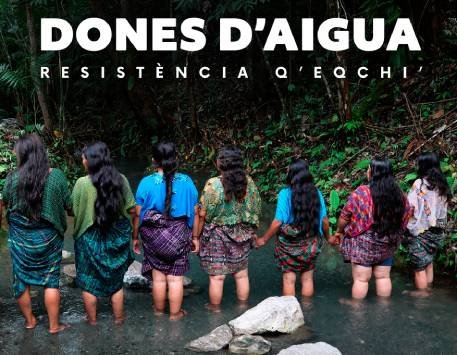
Exhibition “Women of water. Q’eqchi’ resistance”
The Guatemala’s Q’eqchi’ people maintain a deep relationship with waterunderstood not only as a natural resource but as a living being essential for the balance between people, nature and the territory. Women play a central role as caretakers and guardians of watersince they collect it, protect it and transmit the ancestral knowledge, rituals and practices linked to the Q’eqchi’ worldview. From the body-territory perspective, they consider that the health of rivers and that of communities are inseparable: the degradation of water also affects the memory, identity and cultural continuity of the people.
This relationship is threatened by hydroelectric, extractive and tourist projects imposed without the consent of the communities. Infrastructures such as Renace and Oxec, with capital from Spanish companies, have seriously altered the Cahabón River, reducing its flow and causing environmental, social and cultural impacts that are considered both ecocide and ethnocide. Women are the most affected by the lack of water and the violence associated with these processes, but they also lead the defense of the territory despite persecution and criminalization. At the same time, the expansion of tourism and gentrification favor the privatization of natural spaces and the expulsion of communities from their territories. For the Q’eqchi’ people, defending water means defending life, memory, culture and collective survival.
You can check more information about the exhibition “Women of water Q’eqchi’ resistance” on the website of the alterNativa Exchange with Indigenous Peoples.
Last update: 12/06/2026