


The language of flowers: secret messages from nature / Exhibitions / Visit us / Home
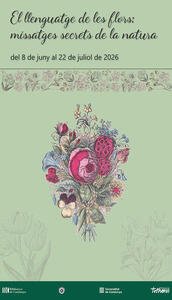
The language of flowers is an original means of communication, full of symbolism and mysticism, which was in vogue between the 19th century and the first decades of the 20th. Flowers have been given their own language, with symbolic meanings hidden in each flower. A secret code where words are not necessary to explain feelings and emotions. Originally from the Orient, he achieved great success in Romanticism Europe, interested in the exotic.
This peculiar language was spread through flower dictionary books and became popular from the printed image. The language of flowers is a true feminine language. Created by women and written primarily by women to be used as a medium of sentimental communication. This type of literature is aimed at a predominantly female audience.
These are books of small sizes and simple bindings, and the most elaborate include illustrations of flowers and plants. They are dictionaries in which each flower is assigned a feeling. They generally explain the origin of the meanings of flowers and plants, taken from Greco-Latin mythology and the Christian religion. Based on the individual symbolism of flora, a syntax of its own is created, in which flowers and leaves acquire the attributes of nouns and adjectives with different verb tenses. Properly, it is as if it were a language with its grammatical rules, not absent of complexity.
The exhibition takes a historical route, from the discovery in London of the 18th century of the language of the flowers of Istanbul, through the adoption of this language in Paris and Brussels in the first half of the 19th, and to its diffusion in Barcelona between the second half of the 19th and the first decades of the 20th.
It shows the repercussion that this language had on the graphic arts, which were echoed from postcards and trading card collections, within the naturalist aesthetics of Modernism. And its reflection in music, based on scores that choose the language of flowers as a central theme. Although today it has been relegated to the anecdote of a bygone era, books continue to be published about the language of flowers; symbolic nature is timeless.
The theme of this exhibition is interdisciplinary, because it fuses literature, botany, symbolism, gender perspective, graphic arts, collecting and music in a Barcelona context with international references.