


The Architecture of MACBA: Guided Tour of the Museum Buildings | Activity
How has the architecture of MACBA been conceived and adapted in the course of its thirty-year history? And how does it respond today to the challenges of a changing contemporary museum? This guided tour offers an expert reading of the museum building as living architectural heritage, relating architecture to uses and management in order to understand how architecture works as cultural infrastructure, making art in the public sphere possible.
Over thirty years, the architecture of MACBA has formed an infrastructure able to adapt to changing artistic practices and museum uses. Located in the Raval neighborhood of Barcelona, in a complex, diverse urban setting, the museum – the main MACBA building – was designed in the context of nineties architecture and museums. Over this time, it has been adapted and reinterpreted to allow its uses to be expanded, its everyday operation reviewed and its role as a venue for public access to contemporary art to be reinforced.
MACBA today takes on the challenges of a contemporary museum on the basis of constant review of its infrastructure and the ways it is used. Issues of environmental sustainability, the flexibility of its spaces, its relationship with the public space and attention to diversity of audiences and communities all form part of an ongoing process of change.
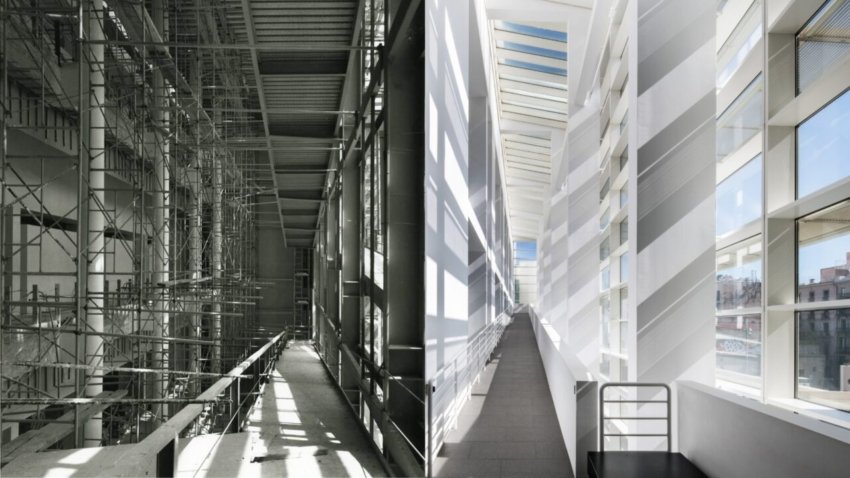
The visit is based on three pillars to allow analysis of MACBA as an evolving facility. First, it examines the original design of the buildingas well as its gradual adaptation to new exhibition formats, to changing artistic practice and to the museum’s practical needs. Secondly, the visit deals with today’s challenges of energy efficiency and sustainability in museum architecture, focusing on the use of natural light, climate control, cutting energy consumption and incorporating more efficient technologies, always in a dialogue with the existing buildings. Finally, the design of the MACBA extensionthe work of H Arquitectes and Christ & Gantenbein, is presented as a paradigm shift in the way the museum is conceived.
In short, this is a visit that invites us to compare two key moments in architecture in Barcelona and consider how architecture conditions the cultural experience, uses and social relations.