


Slavehold Speculations: Staying with then, now | Activity
By centering the visceral interiority of the slavery, I want to risk imagining life in the hold as an entry into theory, but also as a speculative method to meaning-making.
How did the percussive vibration of a chain or the synchronized shifting of a row of bodies function as a non-verbal ledger of existence? What did the “un-accounted” whisper to one another while the clerk above calculated the price of their skin? What jokes, what prayers, what insults, what stereotypes, and what maps of “man” were traded? Who could sleep next to whom? Who had to forgo their food and for whom, and when?
Ultimately, how possibly did the whispered instructions for survival in the Atlantic hold provide the technical blueprint for the Mediterranean today? What is left to be said about trans-solidarities as, at once, enfleshment and embodiment? We speculate. We imagine.
participant
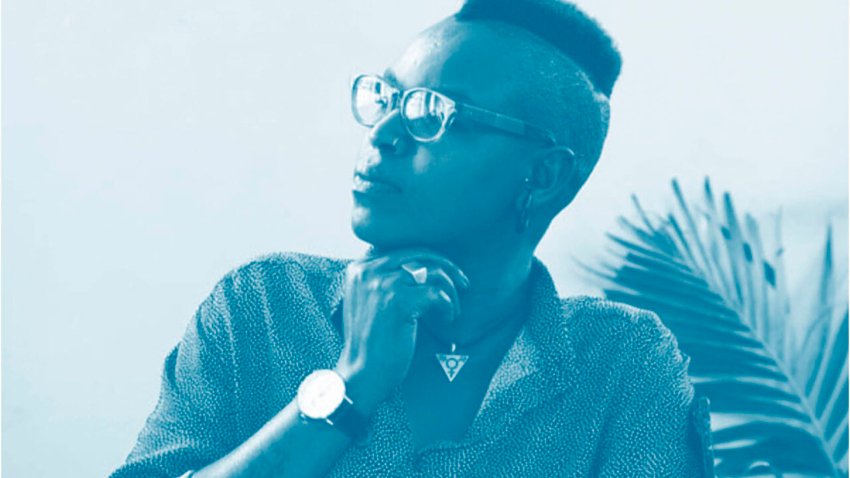
Neo Sinoxolo Musangi is a queer feminist living in Olkejuado, Kenya, and founding member of the Black Planetary Futures Collective. Neo is particularly interested in exploring the possibilities – and querying the limitations – of disciplinary formation as often prescribed by “tradition” within both the academy and the art marketplace, as well as the audiences that these practical-knowledges convene. Their academic work has often emerged from narrative and its offerings for Black theory: an attendance to a time-place world that is not located in the exceptionalism of old ethnographies or the universalism of post-human white worlds.
Neo is currently working on a tentatively titled monograph Public Sex: Failure and Post|Colonial Mediocrity in the Biographical Archive, in which they use narrative as a method. Neo deliberately imagines a fictional but experiential universe that summons theories that might make life possible not only for those in the present moment but also for a past-future in which those often unhumanised and unanticipated might exist or might have existed.
read more
In collaboration with
Funded by the European Union. Views and opinions expressed are however those of the author(s) only and do not necessarily reflect those of the European Union or the European Education and Culture Executive Agency (EACEA). Neither the European Union nor EACEA can be held responsible for them.