


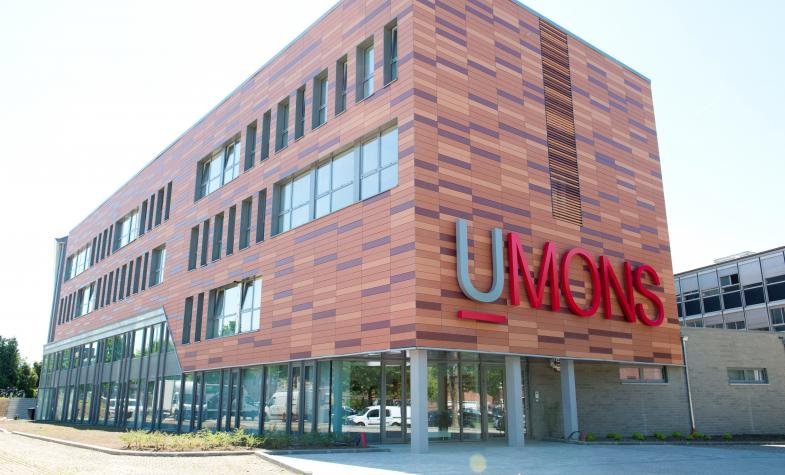
The Carme Junyent Chair of Catalan Language and Society Studies at the University of Mons is organizing, on June 18 and 19, the International Colloquium “The Politics of Intercomprehension”together with the Service d’études ibériques et ibéro-américaines and Le Service d’Etudes et de Recherche de l’Espace Germanophone of the same Belgian university.
The conference will look at different academic and activist perspectives related to intercomprehension, which is the process by which an interlocutor understands unknown languages within the same language family as their primary language. It will offer creative approaches to traditional questions to understand the political and ideological contours of a multilingual future based on mutual understanding.
The colloquium will address the fact that minority language revitalization projects have increasingly promoted mutual understanding as a tool for democratic collaboration, but its consequences for linguistically isolated communities (for example, Basque in Euskal Herria, which does not belong to the same linguistic family as neighboring minority languages) have not been sufficiently explored. In this way, it will be considered what are the benefits and limitations of these practices and how the increase in technological intervention transforms these practices. In addition, it will explore how policies of mutual understanding are deployed in relation to vulnerable groups, such as migration situations.
The main speakers of the conference will be the professor Lou Harveyfrom the University of Leeds (United Kingdom), with the presentation “To be is to communicate: Neuroqueering for future hospital communicators” and Maite Puigdevall Serralvoprofessor at the Open University of Catalonia and president of the Catalan Society of Sociolinguistics, subsidiary society of the Institute of Catalan Studies, with “Ideologies, Practices and Multilingual Governance: Learning Intercomprehension in a Catalan Energy Cooperative”.
On the other hand, the other chair of Catalan studies based in Europe, the Marià Villangómez Chair of the University of Leipzig (Germany), will close the stay of this year’s visiting professor, Esther Gimeno Ugaldewith an international conference on translation, “Literary translation or the art of building cultural bridges” next June 29. This colloquium aims to reflect on the role of translation as an engine for building cultural bridges between Catalan and German literature. Through presentations and dialogue between translators and researchers, translation will be analyzed as a space for cultural mediation and ideas. The conference aims to highlight both the opportunities and challenges presented by literary translation in the contemporary European context, and translators and academics from both languages will participate, as Jordi Jané-Lligé, Michel Ebmeyer or Kirsten Brandt.
Esther Gimeno Ugalde holds a degree in Translation and Interpretation (German and English) from Pompeu Fabra University and a doctorate in Romance Philology from the University of Vienna (Austria), with a thesis dedicated to Catalan national identity and linguistic ideologies between 1832 and 1933. She is a professor of literary and humanistic translation at the Faculty of Translation and Language Sciences of Pompeu Fabra University, where she also holds the position of mobility coordinator. He is currently a member of the Catalan Translation and Literature Research Group (TRILCAT) of Pompeu Fabra University and Center for Comparative Studies from the University of Lisbon, where he directs the IberTranslatio group and the project IStReS. Iberian Studies Reference Site. Since 2024 she is vice-president of the Deutscher Katalanistikverband and member of the editorial committee of the Zeitschrift für Catalanistik.