


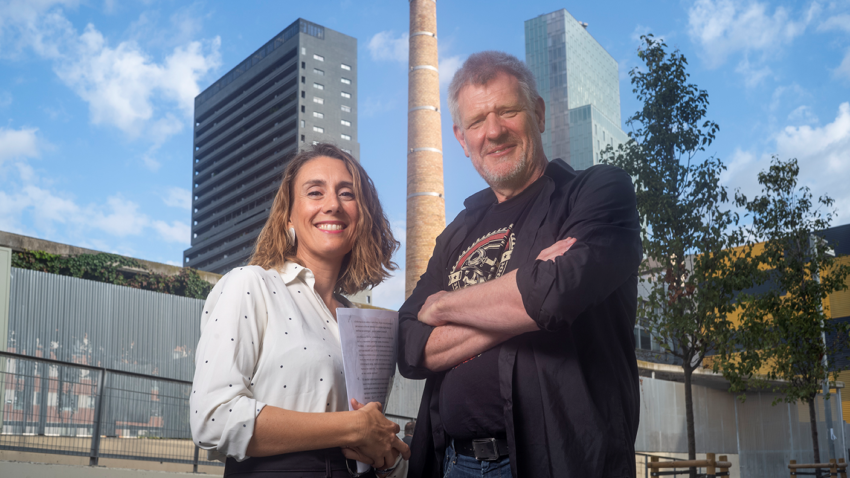
5 lessons from David Bueno to transform education
/Photographs: Enrique Marco
What does science say about the relationship between art, the brain and the human condition? Are we human because we make art or do we make art because we are human?
This is precisely the field of study of the neurobiologist and expert in neuroeducation David Bueno. in the book The art of being humanthe popularizer argues that creativity and artistic expression are not secondary faculties of our species, but are defining traits of human beings that have been with us for more than 40,000 years. With this in mind, Bueno directs his criticism at the current education system. Neuroscience has shown that art improves the flexibility and plasticity of the brain, especially during childhood and adolescence. However, a learning model designed from a utilitarian perspective threatens to extinguish the flame of creativity. So what should we do to stop it?
A few months ago, we had the opportunity to interview David Bueno on this issue. the conversation shed light on the benefits of arts education for students and, above all, how the arts can help us build more hopeful futures. In this article, we share some of the key learnings from the conversation to rethink the role of art in education and imagine new ways to transform it.
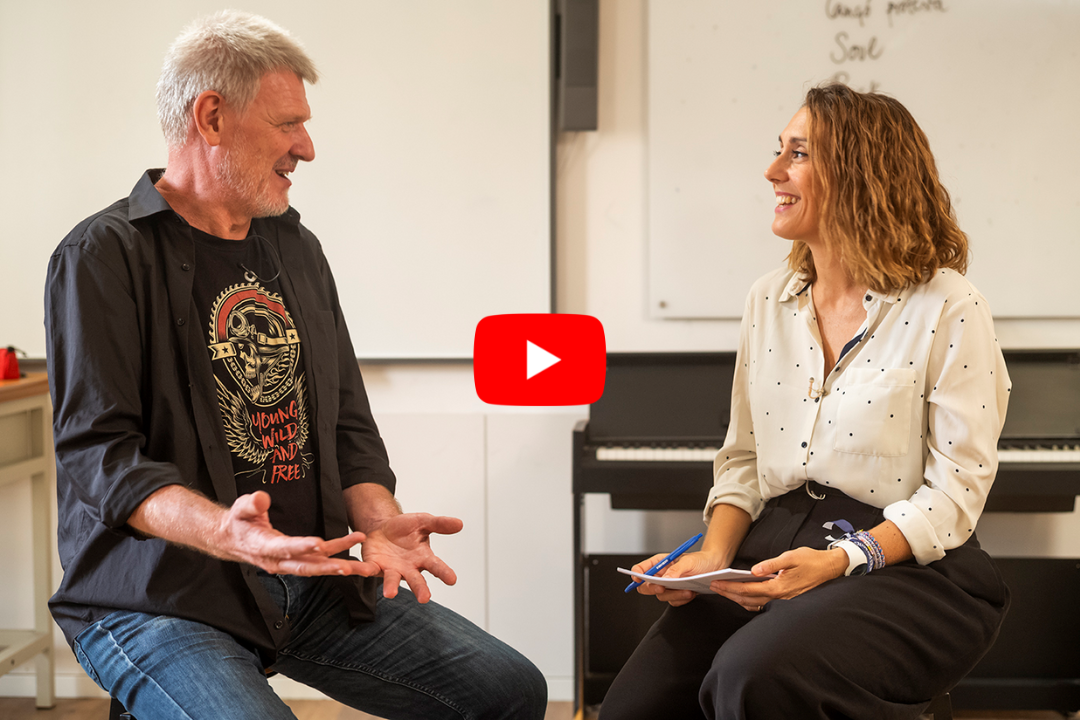 The arts at the center of education: a conversation with David Bueno
Lesson 1: Art is a much broader concept than we think
Historically, Western thought has separated the “sciences” from the “letters”. However, neuroscience findings indicate that this dichotomy is a mistake. The mental processing of a scientific investigation or a philosophical reflection is, neurologically speaking, practically identical to that of the creation of a painting; for the brain, it is not the matter that matters, but the cognitive process.
All of this invites us to expand what we understand as art. We must not only include plastic, visual, sound and performing arts, but also philosophy or science. From this perspective, what art really brings us is flexibility: the ability to think of different alternatives to the same situation. This is precisely what an arts-centered education should cultivate: the ability to think about the world from multiple perspectives and to imagine new responses to shared challenges.
Lesson 2: Why do you remember the lyrics to a song but not the European ones?
Memory is not a drawer where we keep aseptic data, but rather a dynamic system intimately linked to the emotional states we experience. The brain is a profoundly pragmatic organ: when information is linked to an emotion, the system gives it salient importance and saves it efficiently. So, traditional rote learning, without emotional context or curiosity, is inefficient: the content is forgotten as soon as the exam is taken.
Emotions should not be left at the door of the school, but should be cultivated from the classrooms. The arts, therefore, appear as a tool with outstanding potential. In their ability to awaken feelings, they act as a catalyst, transforming the intensity of emotions into deep learning.
Lesson 3: The danger of the utilitarian view and the weight of grades
We have designed an education oriented exclusively towards production. We train doctors, engineers or mechanics, but we often forget that, above all, we are also training people. The model has built a hierarchy of values that does not take into account a very important part of the development of children and adolescents: creativity, curiosity and emotional intelligence. In the words of Bueno: “Education is not just training to be a professional in something; it is to form a character, a personality that is resilient, entrepreneurial and knows how to self-motivate”.
In addition, the traditional mechanism of this evaluation model—the grade—is the worst enemy of creativity. When a student is graded in an artistic discipline, his response is obvious: he will stop expressing what he really feels in order to do what he knows will give him a better grade. The moment art ceases to be a space of freedom, the qualities it could bring to the student atrophy.
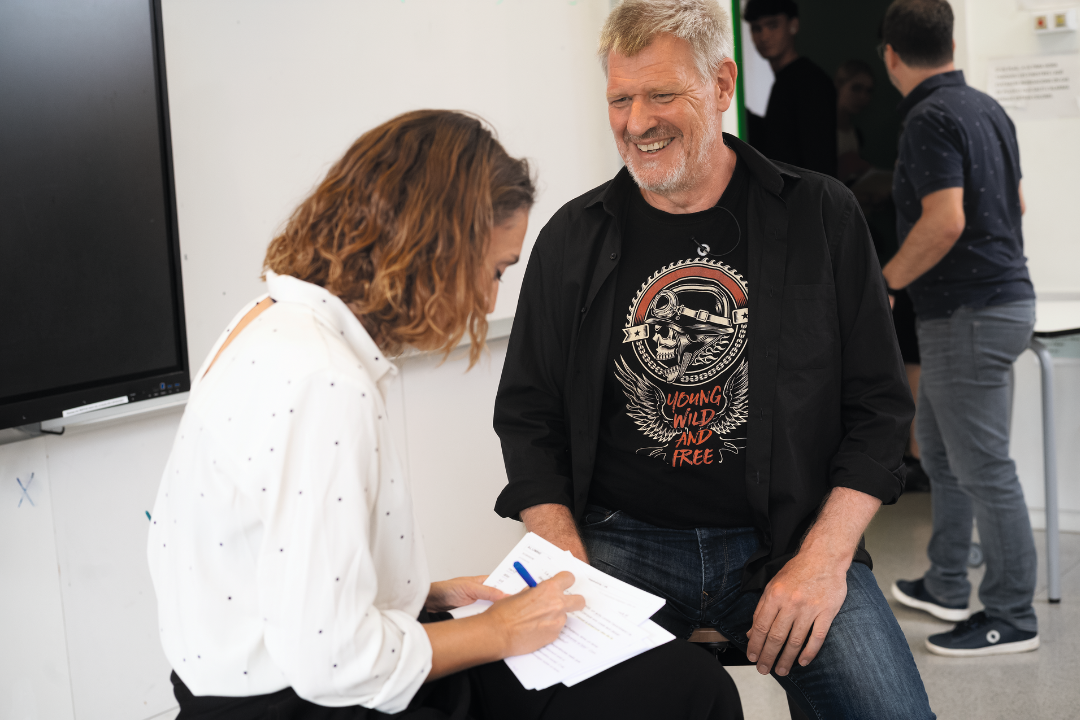 David Bueno at the Institut Quatre Cantons de Barcelona
Lesson 4: Artificial Intelligence and the Value of Reflective Effort
Faced with the tsunami of artificial intelligence, it is necessary to understand a biological reality: the brain is an “energy saver” by nature. Conscious reflection takes place in the prefrontal cortex, an area that consumes a lot of energy and is the first to “disconnect” if someone else does the work for us. Copying and pasting the answers of an AI feeds this biological laziness and atrophies our critical capacity.
Reflective effort is enormously important in terms of cognitive development: it is the process that activates the neural networks that fix learning. In other words: without effort, there is no stable support for knowledge. Now more than ever, it is necessary to awaken students’ curiosity so that, in effect, they perceive effort as a necessary – and enriching – part of the educational process.
Lesson 5: Ephemeral Happiness vs. Sustainable well-being
It is vital that we educate on the distinction between dopamine and serotonin. The commercial happiness that social networks sell us is linked to the dopamine: it is euphoric, intense, but ephemeral and addictive. The brain cannot maintain this state for long, and after the peak comes a sharp decline.
Instead, art leads us towards the welfareregulated by the serotonin It is a more stable state, a “good roll” of funds that allows us to feel good about ourselves and the environment. Well-being is so robust that it even allows us to process uncomfortable emotions like sadness or jealousy without collapsing. Here, playing with the arts becomes a vital attitude: it is the mechanism by which we learn to rehearse life without fear of failure.
Conclusion: The future is built by dreaming
David Bueno’s lessons challenge us to review the very foundations of the educational system. Neuroscience shows that learning is not just accumulating data, but an enormously complex process that directly affects children’s cognitive development. So, if creativity is not a mere complement, but an essential condition of our nature, to relegate the arts to a secondary role is to impoverish society’s potential.
Transforming education therefore implies understanding the arts as a motor of thought, well-being and cohesion. The goal is not to train artists, but educate people capable of imagining alternatives and building shared futures. In an accelerated and technological world, this gesture has enormous value: educating to think, to feel and, above all, to continue dreaming.