


A plural economy for Barcelona
“In Barcelona and its metropolitan area, the plural economy is already a reality, although it is often deployed in a fragmented way, with limited resources and without adequate structural support.” This is how thereport ‘Barcelona Plural Economy’ which has made theCoòpolis Observatory.
Barcelona has lived in the last decades a transformation of its economic model based on theattraction of external capital and public-private alliances. This strategy, designed to strengthen the global projection of the city, has favored urban growth and projects such as the 1992 Games, the 2004 Forum or the 22@, but has reduced municipal autonomy to apply redistributive policies and has generated tensions between economic development and social cohesion.
In a context of model exhaustion and the search for sustainable alternatives, theanalysis and the action proposals of this report which places the plural economy as a model guaranteeing one diverse economic model that includes cooperatives, social enterprises and community initiatives.
The plural economy presents itself as one alternative to the current economic modeltoo dependent on private capital and environmentally unsustainable. The report proposes strengthen local economic sovereignty through alliances between administrations, cooperatives and communitieswith mechanisms of economic democracy that allow collective decision on economic activity. This model is committed to prioritizing rights such as housing, food, energy and care, and uses Public-Cooperative-Community collaborations to democratize governance and reduce dependence on global capital. With practices such as community renewable energies, short food circuits or sustainable mobility, the plural economy shows that a new model for Barcelona is viable and necessary.
The report reviews several international success experiences but also others from our country: Le Chantier de l’économie sociale (Quebec, Canada), Cooperation Jackson (Mississippi, USA), Community Wealth Building, el case of Hernani in Euskal Herriaagro-ecological and distribution projects, cooperative housing, community projects.
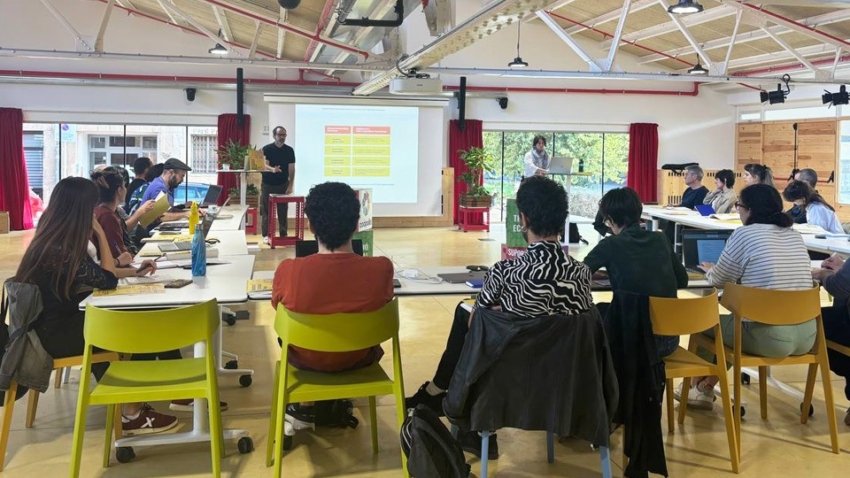
In addition to the analysis, the study makes a collection of strategic axes to promote momentum in areas such as food, energy and housing which are embodied in various actions to consolidate the plural economy. You will also find, in these videos, a small summary of the key topics that were addressed. In this first part the scenarios that must be articulated to achieve a democratic and participative economy are explained. And in in this second video we address housing and energy proposals in a more concrete way.
The full study is available onlineand can also be obtained in printed form in the Bloc4Bcn spaces.