



Root dance as a refuge from barbarism
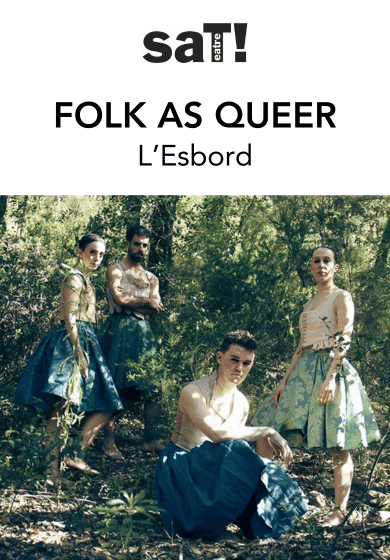
This season’s dance program at Sant Andreu Teatre is titled Dance or barbarism and we can see as a poster image two dancers up to the torso with two tadpoles hanging from their hands. This is a photograph of the show Folk as queerof The Draftdirected by the dancer, choreographer and dancer Peter Seda.

Peter Seda
The association of ideas and image is quite apt to raise a series of issues that are currently affecting us as a society and that, especially, root dance is channeling. The disorientation and catastrophism that afflict us, and that prevent us from projecting ourselves into the future, have forced us to ask ourselves about the value of tradition and what we should do with it. Faced with the barbarism of capitalist globalization, the root dance proposes to go in search of what makes us unique as a community and that can unite us as individuals, putting it in value from an artistic point of view.
This is where Seda is framed as a creator, as well as other young people who take part in the Program of Impulse to Root Dance – promoted by the Department of Culture of the Generalitat, together with the Mediterranean Fair of Manresa -, who in many cases start from their experience in the world of esbartas and traditional dances. This is the case of the Barcelona choreographer, who at the age of 22 graduated from the Professional Dance Conservatory of the Institut del Teatre, but who from the age of 3 already participated in the Esbart Maragall (of which he is still a part).
In 2022 he presented his first creation in Manresa, The Hereu Rieraa street solo in which he deconstructed the traditional forms and codes of the flat point from contemporary dance. With a choreography that seduced dancers as well as dancers, this piece was one of the first attempts to articulate a discourse and a methodology of its own about root dance, which Seda has continued to develop with Folk as queer (2024) — the play that can be seen at Sant Andreu Teatre on December 19 and 20. With a hall show for four performers, this time it takes a step further in the deconstruction of popular dances and an even more uncomplicated reflection on the traditional imagination and aesthetics, understanding queer as a gesture of transgression that not only has to do with the performativity of the genre, but also with cultural identity.
Identity is exactly what Seda’s other piece is about, self loathing (2023) —which can be seen at Espai Texas on January 31 and February 1—, created in collaboration with the gralera Sonia Arias and with the participation of the drag queen Jessica Pulla. It is a more performative show, which combines music and dance, where the two creators (and friends) wonder about the contradictions of dedicating themselves professionally to popular culture, with the inevitable background of the contradictions that we Catalans feel regarding our own identity.
A good opportunity, therefore, to get to know the creative universe of Pere Seda and get closer to the root creation as a refuge from barbarism.
More information, images and tickets: