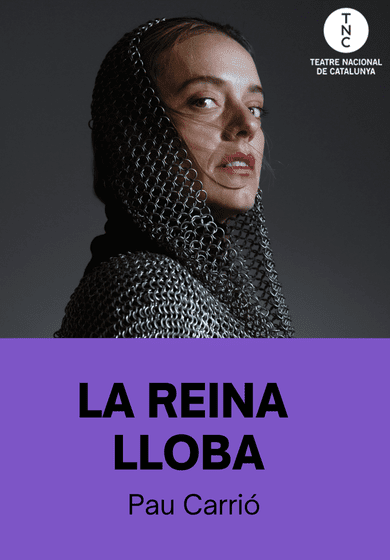




Pau Carrió gives Margarida d’Anjou her own voice in ‘La reina loba’
The Wolf Queen arrives this week at Sala Petita del National Theater of Catalonia like the tragedy that William Shakespeare never wrote about Margaret of Anjoua key character in his historical pieces. The playwright and director Pau Carrió signs a show in verse, in Catalan, that rescues the vilified figure of the warrior queen and makes her the center of his own story.
The tragedy that Shakespeare he never wrote
Presented as “the tragedy about Margaret of Anjou that Shakespeare did not write”, the piece builds a puzzle with fragments ofHenry VI (parts I, II and III) i Richard IIIcombined with original texts by Carrió to fill the Bard’s silences. The result is a life journey that begins with an old, dispossessed queen and goes back to the young sixteen-year-old prisoner, then moves forward through an existence marked by the struggle for power in a man’s world.
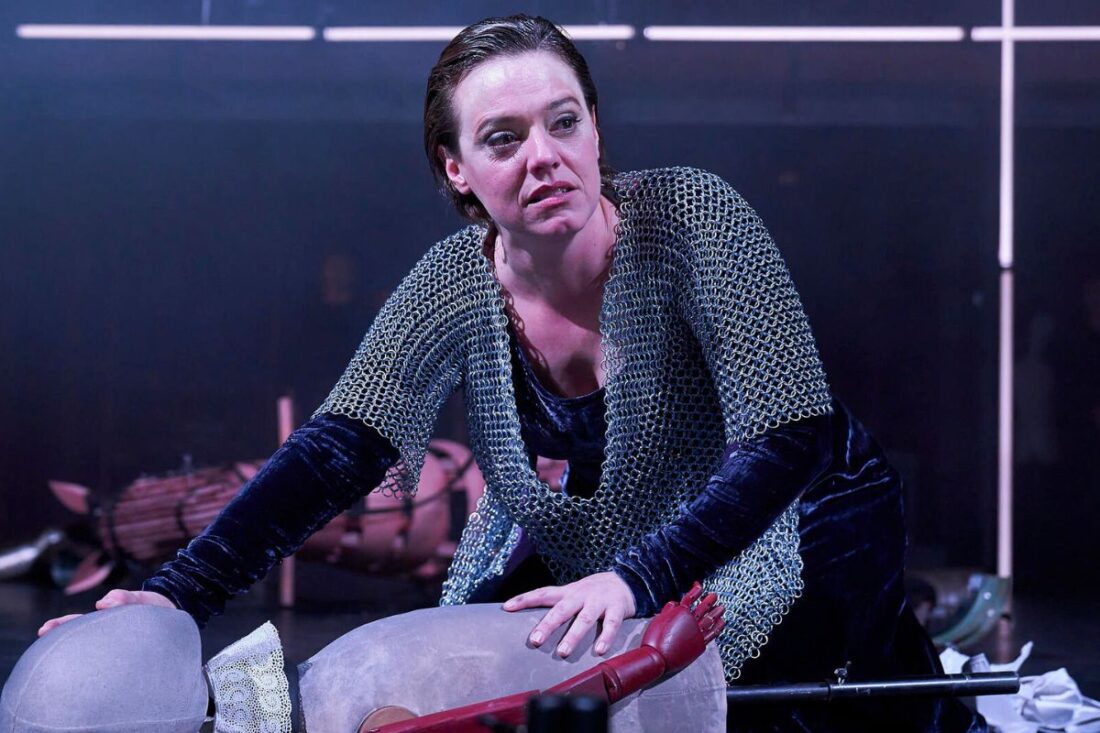
The artistic director of the TNC, Carme Portacelihas placed the premiere within “a season dedicated to women and giving back to them a story that has traditionally been stolen from them”, and has emphasized that Carrió puts at the center a character who in Shakespeare often appears as a shadow. In this sense, the play allows Margarita to “explain herself extensively” and assume her dark side without exemplifying will.
A deep connoisseur of the Shakespearean corpus, Carrió defends that Margarita d’Anjou deserves her own tragedy because she does not fit the archetype of women who crack and end up committing suicide. In her reading, she is a figure who is related to power, taking it and disputing it, and who is labeled a witch or a wolf by the same men who act with equivalent brutality. The director has remarked that this violence is not foreign to the present and that he does not feel obliged to a literal fidelity to the originals: Shakespeare, used to being removed, would not be nervous.
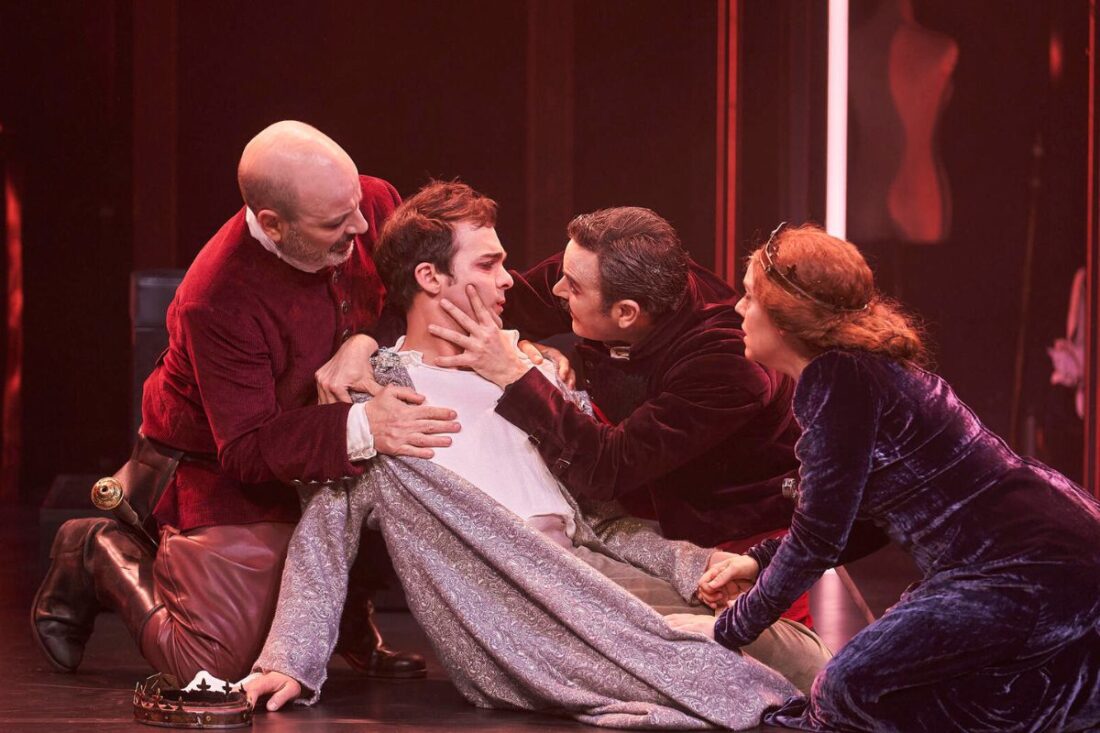
The protagonist is Maria Rodríguez Sotowho faces a role that she herself defines as “a challenge” and also “a brown one”. The actress emphasizes that The Wolf Queen it is a work of basic and intense emotions in which the character exhibits an instinct for survival, political reason, love, hatred, sadism and an impulse for revenge. The scenic journey allows him to play with a very marked physical and mental evolution and with the hyper-awareness of an already written destiny.
The production is a choral journey with seven performers who embody a dozen characters —Quim Ávila, Pepo Blasco, Queralt Casasayas, Joseph Julien, Xavi Ricart, Pau Roca i David Vert—, with live music fromAna Nicolás de Cabo. Carrió opts for an Elizabethan and meta-theatrical staging, with a practically empty space, quick costume changes and the word as a visual engine so that the viewer’s imagination builds palaces and battlefields.
The Wolf Queen it is a contemporary revision of a historical and literary figure of the first order and opens a space for a woman associated for centuries with cruelty and excess to explain herself in all her contradictions.
More information, images and tickets: