



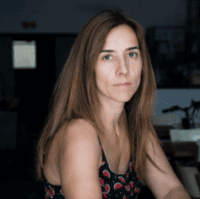
Montse Germán: “I really like to test myself”
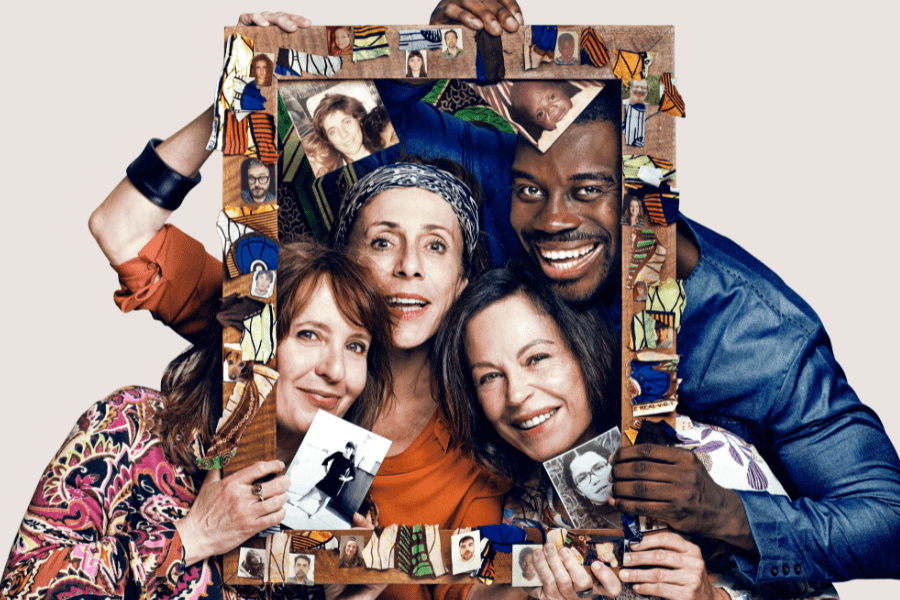
Montse German (Sabadell, 1969) happily accepts that we call her “Dueso girl”, because she once again puts herself under the command of a director and playwright whom she considers a teacher since she left the Theater Institute. Over the past thirty years, Manel Dueso he has directed it in five shows; the last one, this one Jambo Bwana that will make him spend Christmas in the Small Room of the National Theater, from December 17 to January 11, next toAurea Marquez, Antonia Jaume i Use Tambadou.

I wanted to greet you with a “jambo bwana”, which means “hello” in Swahili, right?
Yes, and it’s a song too. Manel Dueso knows Africa well, he has been there many times and he loves its people very much. Jambo Bwana it wants to be a song to life, to the unity of people in the world. In this terrible moment we live in, he gives us Africa as a point of reference, because that is where everything begins, a continent from which we have benefited greatly.
The pretext is apparently simple: they are three friends who meet before Christmas to spend the weekend together. One of them has been assaulted.
They are three characters who each have their own drama and are on the edge. We meet to think about how to avenge the sexual assault suffered by the friend (Àurea Márquez), but two months have passed and that anger they had is transformed. What they do is support each other, because despite the trauma, the suffering, the misfortunes, despite everything, we have no choice but to look forward. At one point, something happens that radically changes the course of events.
And that’s where Usu Tambadou comes in.
Samba symbolizes purity and cleans up some of the karma of these broken women and places them in a place of hope. They represent our society and it is this Third World that, when we name it, enters our home and changes us. It is a recognition of this continent mistreated by the West.
Manel Dueso writes a very dark, violent theater that focuses on places you wouldn’t want to look. These three women think of an extreme solution. Are they three victims who are tempted to rebel in a bad way?
yes Sexual assault, explained by Àurea, is very beastly and very powerful. The work shows you this darkness, which bothers you, plants it in front of you and, hot, you would start making a pickle.
What’s it like for a performer to go through that? For the viewer, they are very intimate and intense stories.
That’s what it’s all about. Manel explains the characters through what they hide. They have to go through this pain. It is not a question of using your experiences, of remembering “my father died” to cry at a given moment. For me it’s not about that, it’s about connecting with the emotion you think the character has. He asks you to transit the emotions of truth, that it is not imposed; and knows how to distinguish very well what is believed and what is not. For me he is one of the best directors of actors in this country.
You shared the first work thirty years ago. How do you remember that Montse?
I have always worked from the truth, and I suppose that, as you grow, mature and have experiences, this truth has more depth, more depth. It’s the stuff of cross-country running. I’ve always had the feeling that my life has run very parallel to what was happening to the characters. And the more experience you have, the more you can enrich the characters.
“As actresses we are here to act as a mirror for the public”
Do you feel comfortable putting your body in these roles that have a point of complaint?
yes As actresses, we are precisely here to act as a mirror for the public, so that through us they understand many things, make decisions, understand themselves better… We are like a channel. I haven’t been able to choose too much, throughout my career, but everything I’ve done I’ve done with conviction and I didn’t have to do any paperwork because I had to eat.
Are you excited by the abyss of a paper’s difficulty?
I really like to test myself, yes. It is very exhilarating to think that you can do these somersaults. I’ve been combining television and theater for many years and, with time, you have tools, a craft, and you feel capable of taking on any challenge on stage. I never approach it from fear, because I don’t think about the result, whether it will be a success or not.
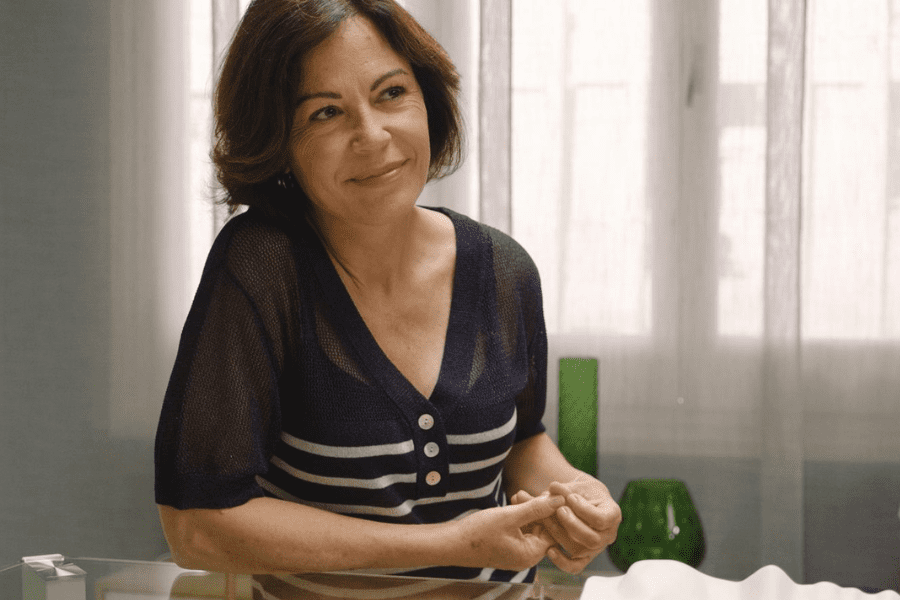
Theater is your vocation as a youth, but people will recognize you more because you have been a constant presence for the last twenty years on TV3, from Labyrinth of Shadowspassing through Unfaithful and now eight seasons of Like it was yesterday. Are there pros and cons?
Combining the two things is hard, in terms of time and logistics: they are completely different rhythms and schedules. It is even easier to combine it with cinema. But having a daily series, for me and for all the actors in the world, means security, peace of mind, being able to make a drawer in such an unstable job: it’s a gift from heaven. I always defend the daily series. It’s like working a muscle: you’re always solving scenes, connecting with emotions, and you have to solve it fast. Now, you know that when it’s over you’ll be living that uncertainty again – which hopefully won’t be so much.
More information, images and tickets: